Changing Direction: I Wasn’t Wrong—Just Talking to the Wrong Audience
INTERNATIONAL CHAPTER

creative team
Published on 20 May 2026
I didn’t set out to become a founder.
There was no big moment of clarity. No master plan. No “this is my time” hallelujah.
I was made redundant.
But if I’m honest, something hadn’t felt right for a while. I’d built my career in the exhibitions industry, moving from commercial roles into strategy, but over time I no longer felt connected to the work.
So when redundancy happened, I did what most people would do: I started looking for another role. And everything felt…wrong. Every opportunity looked like more of the same. Business as usual.
For the first time in my career, I couldn’t justify the compromise. At the time, I couldn’t fully explain why.
Now I can.
Starting from scratch doesn’t feel empowering—it feels terrifying
Work found me before I fully understood what I was building. A few conversations turned into opportunities, and suddenly I had to decide whether to return to employment or try building something of my own.
Entrepreneurship didn’t feel exciting or empowering from the start.
As a single mum, I had bills to pay. And I didn’t have a financial cushion to fall back on (the why is a whole other story—but let’s just say, it’s best not to talk back to a judge). And I had no clear idea what I was actually offering.
It wasn’t a leap of confidence. It was a leap of fear.
Someone said to me at the time, “lean into the fear—that’s where the magic happens.”
I wasn’t leaning into it. I was drowning in it. And very early on, I realised that mattered.
I was totally going to Forrest Gump my way through this.
Clarity? I thought I’d figure that out along the way
The early days weren’t strategic. They were practical. I set up a company, built a website, updated LinkedIn, and started putting myself out there.
I kept things simple: me, an Excel sheet, and a fast-track education in AI.
At that stage, my “offer” was essentially: “I’ve got experience — who wants to work with me?”
Initially, I thought I wanted to focus on behavioural data because I could see the commercial value of businesses truly understanding their audiences. But the market didn’t immediately connect with it.
So I pivoted back towards strategy—this time through a product mindset focused on customer needs, value, and intentional decision-making.
During that period, I interviewed female founders about how they built businesses around real problems. Those conversations shaped my thinking more than I realised at the time. But even then, something still felt…wrong.
I wasn’t winning significant business, and some of the work I was doing made me question whether I was truly delivering the value I wanted to create.
The biggest lesson: what you think is valuable isn’t always what your clients want to hear
One of the hardest parts of my journey has been realising that the insights I naturally gravitate towards aren’t always the ones traditional exhibition businesses are prioritised to act on.
Through research and conversations across many communities, I kept hearing the same themes emerge: People weren’t necessarily looking for more “big”. They were looking for relevance, connection, and more meaningful engagement.
What consistently surfaced were conversations around collaboration, trust, and more intentional experiences—not simply faster commercial growth.
At first, that felt uncomfortable. When your perspective doesn’t align with what your client expects, it’s easy to assume the problem is you.
For a while, I thought it was.
But over time, I realised something important: The issue wasn’t the insight itself — it was alignment. I wasn’t wrong. I was just talking to the wrong audience.
Finding your place often means leaving what you know
For a long time, I assumed “my people” were within large exhibition organisations, simply because that’s where I’d built my career.
But over time, I realised my work was aligning elsewhere.
I found stronger connection with associations, high-value media businesses, and organisations focused on building depth of engagement rather than scale alone.
What mattered most to them was community, meaningful connection, long-term trust, and creating genuine value for the audiences they served.
That realisation changed the direction of my work completely.
Confidence doesn’t come first—necessity does
One of the most defining moments in my journey started from a very practical reality: I needed to earn.
An opportunity came up to deliver a live experience in a market where I wasn’t fully established, and if I’m honest, I didn’t feel entirely ready for it. But I said yes anyway—and then worked out how to make it happen.
I leaned on my network and partnered with people whose strengths complemented my own. And it worked.
That experience taught me something important: confidence doesn’t always arrive before action.
Sometimes you build it through necessity and adaptability.
Failure isn’t a moment—it’s the process
Over the past two years, I’ve experienced more setbacks than I can count. Opportunities that didn’t materialise. Conversations that went nowhere. Projects and partnerships that ultimately weren’t the right fit.
Looking back, those experiences shaped the direction I’m moving in now.
I’ve come to realise that failure isn’t necessarily something to avoid—it’s often part of refining, learning, and understanding where real alignment exists.
Recently, I came across the phrase: FAIL = First Attempt In Learning. And honestly, that resonates.
Running a business as a woman isn’t just about business
As a single mum, flexibility wasn’t a “nice to have”—it was essential.
The traditional structure of many roles in our industry simply didn’t fit the reality of my life.
But beyond logistics, entrepreneurship forced me to become more honest about what felt right, what didn’t, and who I wanted to become while building something of my own.
I learned to trust myself more, say no more often, and recognise that not every opportunity or partnership is the right one.
What I know now (that I didn’t then)
If there’s one thing this journey has taught me, it’s that clarity rarely arrives at the beginning.
You learn by doing. You refine through experience. And often, the market shapes you as much as you shape it.
Your network matters more than you think—not just for opportunities, but for support when things feel uncertain.
And building something of your own isn’t easy. It requires getting comfortable with being uncomfortable—and accepting that as you grow, the challenges evolve with you.
And most importantly—alignment matters.
Where I see the opportunity for our industry
After more than 100 conversations across industries, one thing has become increasingly clear to me:
The future of events isn’t simply about creating bigger experiences.
It’s about creating more intentional ones.
There’s a real opportunity for our industry to move beyond transactional interactions and surface-level engagement, and instead focus on building communities rooted in trust, relevance, and meaningful connection.
Final thought
Two years ago, I didn’t know what I was building.
In many ways, I’m still figuring it out.
But now, it’s grounded in something much clearer:
Work that I believe in. Work that creates genuine value. And a way of working that actually fits the life I want to build.
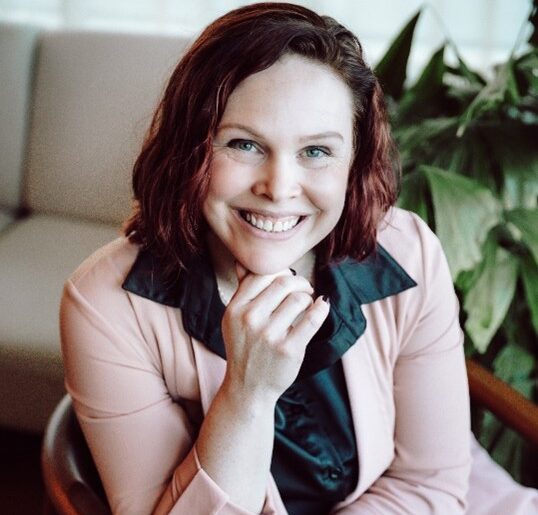
Cara Turner
Cara Turner is the founder of Integre, where she helps associations, high-value media, and exhibition brands think differently about their audience—and turn that into real value.
After more than 20 years’ in B2B media and large-scale events, Cara stepped away from a senior leadership role at Informa Markets to build something more aligned with how she believes the industry needs to evolve.
Her work is grounded in a clear belief: most organisations aren’t short on activity—they’re short on clarity. And when clarity is missing, decisions drift away from what audiences actually value.
Today, Cara works with organisations that want to take a more intentional approach—focusing on relevance, connection, and long-term engagement over scale for the sake of it.
Through buyer-led strategy, curated executive experiences, and strategic delivery, she helps teams see what actually matters—and act on it with confidence.

Write a comment